


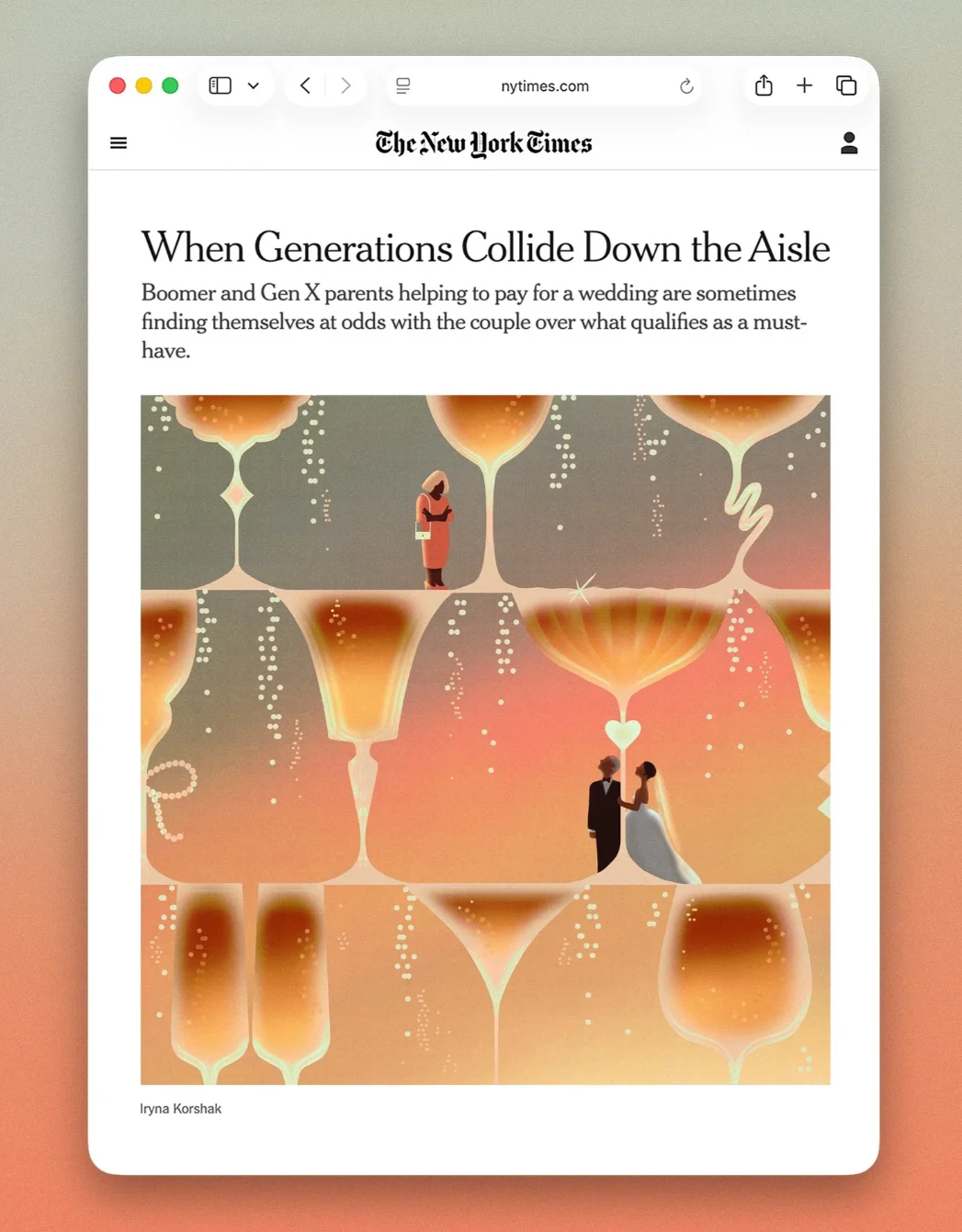
A recent New York Times feature has cast a spotlight on the pervasive intergenerational conflict inherent in modern wedding planning, specifically highlighting the friction between couples aspiring to a deeply personal celebration and parents often funding, and consequently envisioning, a "timeless" event. The article, published this week, draws on the extensive experience of Ariel Meadow Stallings, founder of Offbeat Wed, who has observed these dynamics unfold for two decades. Stallings was quoted in the piece, contributing her unique perspective on how wedding planning often serves as a crucible for broader family power dynamics. Notably, the Times article also featured Emily Berg, an Ohio wedding planner and a member of Offbeat Wed’s vendor community, underscoring the platform’s role as a vital resource for nuanced insights into the evolving landscape of matrimonial celebrations. This marks the second instance this year that Offbeat Wed’s network has been acknowledged by the Times, signifying a growing recognition of the platform’s expertise in unconventional and contemporary wedding trends. While the Times article effectively captured the surface-level disagreements, it left unexplored some of the deeper, structural issues that fuel these conflicts, particularly the long-standing marketing strategies of the wedding industrial complex.
The Genesis of the Conflict: A Tale of Two Generations
The New York Times piece delves into a phenomenon increasingly familiar to wedding planners and couples alike: the clash between distinct generational expectations. Younger couples, primarily Millennials and Gen Z, often prioritize individuality, sustainability, and an authentic reflection of their partnership in their wedding celebrations. Their inspirations are drawn from a vast digital landscape—Pinterest boards, Instagram feeds, and niche blogs—offering an endless array of bespoke and unconventional ideas. Conversely, many parents, typically Baby Boomers or Gen X, often approach weddings with a blueprint forged by traditional media, societal norms from their youth, and a desire for an event that conveys status, elegance, and adheres to what they perceive as classic decorum. This often translates into preferences for grand ballrooms, elaborate floral arrangements, extensive guest lists, and formal attire—elements that align with a "timeless" aesthetic rather than a "personal" one.
Ariel Meadow Stallings’ two decades of curating Offbeat Wed have provided an unparalleled vantage point into this evolving dynamic. Having witnessed Gen X navigate their own weddings as young adults, and now seeing them as parents of modern newlyweds, Stallings observes a cyclical pattern of conflict. The core of her insight, and a crucial element often missed in mainstream discussions, is that these disagreements over table settings or guest lists are rarely about mere aesthetic preferences. Instead, they are symptomatic of deeper power negotiations, financial control, and differing understandings of what constitutes a significant life event in contemporary society.
The Unseen Hand: How the Wedding Industrial Complex Markets to Parents
A fundamental structural issue underpinning much of this intergenerational friction lies in the sophisticated, often overlooked, marketing strategies of the mainstream wedding industry. Contrary to popular belief, the primary target demographic for many facets of the wedding industrial complex is not the couple themselves, but their parents. This strategic targeting is rooted in a clear economic reality: parents frequently contribute a substantial, if not majority, portion of the wedding budget.
According to various industry reports, parents contribute to an estimated 70-80% of wedding costs in the United States, with average parental contributions often ranging from $20,000 to $30,000 or more. The average cost of a wedding in the U.S. has soared to over $30,000, a figure that has steadily climbed over decades, far outpacing inflation in many other sectors. This financial leverage grants parents significant sway over decision-making, a fact the industry has shrewdly capitalized on for decades.
Parents, having grown up in an era dominated by print media (wedding magazines, bridal guides) and network television, developed a different relationship with media authority. When a traditional wedding venue’s in-house coordinator, a conventional florist, or a luxury bridal salon dictates certain "necessities" – whether it’s specific decor, a certain number of courses, or a particular brand of champagne – many parents internalize these pronouncements as non-negotiable facts. This perception is often reinforced by decades of aspirational marketing that equates grandeur and adherence to established traditions with the "perfect" wedding.
Conversely, today’s young couples, steeped in the digital age, have spent years swimming in a vast ocean of contradictory internet opinions, diverse cultural practices, and personalized DIY alternatives. They are inherently more skeptical of singular "authoritative" voices and are far more inclined to question commercial traditions. What appears mandatory to their parents often strikes them as arbitrary, financially prohibitive, or simply not reflective of their unique identity. This disparity in media consumption and critical engagement creates fertile ground for conflict, as parents attempt to enforce commercial traditions that their children neither recognize as mandatory nor desire. Stallings has previously labeled some of this mainstream wedding marketing as "predatory," arguing that it exploits parental desires for their children’s happiness and social standing by pushing expensive, often unnecessary, elements.
Weddings as a Petri Dish: Amplifying Family Dynamics
Stallings’ long-held observation that weddings serve as a "petri dish of family dynamics" is particularly pertinent to this discussion. A wedding, with its intense emotional stakes, significant financial outlay, strict deadlines, and often complex guest list negotiations, concentrates all pre-existing family issues into a single, high-pressure event. Long-simmering tensions—how a family handles money, the extent to which adult children are treated as autonomous individuals, and the family’s capacity for navigating disagreement—are all brought to a boiling point.
For many couples in their twenties or early thirties, wedding planning marks the first time they are compelled to negotiate with their parents as fellow adults on a matter of substantial financial and emotional weight. This transition can be fraught with difficulty. Many families lack a robust communication infrastructure to handle such high-stakes discussions effectively. This can lead to rapid escalation of disagreements, transforming what might appear to be minor squabbles over floral arrangements into profound power struggles over autonomy and respect. The predictability of these conflicts, once observed repeatedly over time, underscores their systemic rather than idiosyncratic nature.

The Chronology of Changing Wedding Norms
To understand the current intergenerational friction, it’s helpful to trace the evolution of wedding traditions and the industry itself:
- Pre-Mid-20th Century: Weddings were often smaller, community-centric affairs, heavily influenced by religious or cultural traditions. Parental involvement was significant but often more about logistics and community blessings than elaborate commercial undertakings.
- Mid-20th Century to 1980s (Boomer Generation’s Weddings): The rise of mass media, particularly bridal magazines and Hollywood films, began to standardize the "dream wedding." This era saw the popularization of white dresses, multi-tiered cakes, and church ceremonies. The industry started to consolidate, offering package deals and promoting specific aesthetics. Parental financial contribution became a significant norm.
- 1990s to Early 2000s (Gen X’s Weddings): While still influenced by tradition, Gen X began to introduce elements of personalization and a slight rebellion against rigid norms. The internet was nascent but started to offer alternative ideas, though mainstream media remained dominant. Parental financial involvement continued to be strong.
- Mid-2000s to Present (Millennial and Gen Z Engagements): The internet exploded, creating an unprecedented democratization of wedding inspiration. Blogs like Offbeat Wed emerged, celebrating individuality and non-traditional approaches. Social media platforms like Pinterest and Instagram became primary sources of ideas, fostering a desire for unique, personalized, and often highly photographed events. Concurrently, average wedding costs continued to rise, further entrenching parental financial leverage and, consequently, their desire for a return on their "investment" in the form of a "traditional" event.
This chronological shift highlights how different generations were socialized into distinct wedding ideals, setting the stage for contemporary conflicts.
Implications for Wedding Vendors and the Broader Industry
For wedding vendors, particularly those specializing in non-traditional or personalized events, understanding these underlying structural and familial dynamics is not merely cultural context—it is practical information essential for effective client relations. When a couple expresses stress or frustration about parental conflict, the issue is often far more profound than a simple disagreement over taste. It frequently represents a deep-seated power negotiation that the family has never truly engaged in before, with the wedding acting as the high-stakes arena.
Knowing this allows vendors to shift their approach. Instead of merely offering aesthetic compromises, they can listen more deeply, ask more insightful questions about family communication styles and financial arrangements, and ultimately provide more holistic support. Vendors can act as mediators, educators, or strategic allies, helping couples articulate their vision while respectfully navigating parental expectations. This nuanced understanding can enhance client satisfaction, reduce vendor stress, and ultimately lead to more authentic and harmonious celebrations.
The rise of communities like Offbeat Wed’s vendor network demonstrates a collective effort within the industry to address these complexities. By fostering a space for sharing experiences and best practices, these communities equip vendors with the tools to navigate the intricate web of family dynamics, financial pressures, and generational divides that characterize modern wedding planning.
Why the New York Times and Mainstream Media are Paying Attention
The consistent engagement of prestigious publications like The New York Times with Offbeat Wed and its community signals a significant shift in how mainstream media perceives and reports on weddings. No longer solely a domain for aspirational fashion spreads or etiquette guides, weddings are increasingly recognized as potent cultural barometers, reflecting broader societal shifts in family structures, financial realities, and individual autonomy.
Reporters covering relationships, family dynamics, and cultural trends are actively seeking more nuanced perspectives on weddings—perspectives that move beyond the superficial to explore the deeper psychological, economic, and sociological underpinnings of these events. Offbeat Wed, since its inception in 2007, has consistently championed this nuanced thinking, providing a platform for discussions that challenge conventional norms and embrace diversity. When a reporter like Tammy LaGorce needs a source who can offer a long-term, insightful view on specific dynamics, platforms with a proven track record of deep analysis become invaluable. The referral of active members from Offbeat Wed’s vendor community further illustrates the platform’s role as a nexus for practical, real-world experience and thoughtful analysis.
Broader Societal Implications and the Future of Weddings
The intergenerational wedding conflict is more than just a family squabble; it’s a microcosm of broader societal shifts. It speaks to:
- Evolving Family Structures: A move away from hierarchical family models towards more egalitarian relationships between parents and adult children, albeit with lingering traditional expectations.
- Financial Independence vs. Dependence: The tension between young adults striving for autonomy and the financial realities that often necessitate parental support for significant life events.
- Cultural Pluralism: The increasing diversity of wedding traditions and personal expressions, challenging a singular "ideal" wedding narrative.
- The Power of Digital Media: How social media has fragmented traditional authority and empowered individuals to curate their own realities and aspirations.
As these trends continue, the wedding industry will face increasing pressure to adapt. Vendors who understand and cater to the desire for authenticity and personalization, while also adeptly navigating complex family dynamics, will be best positioned for success. The dialogue initiated by articles like the New York Times piece and amplified by platforms like Offbeat Wed is crucial for fostering greater understanding, empathy, and ultimately, more meaningful celebrations for all involved. The ongoing conversation about who pays, who decides, and what truly constitutes a meaningful wedding will continue to shape the future of this enduring social institution.